Shop Big Deals From Big Brands Free Delivery On Order Over £99 Sign Up For Exclusive Offers Compare Products Using Our Comparison Feature Shop Big Deals From Big Brands Free Delivery On Order Over £99 Sign Up For Exclusive Offers Compare Products Using Our Comparison Feature
Request Machine Demonstration

Providing Cleaning Technology for over 40 Years

☣️ Buy H-Class Vacuum Cleaners & Hazardous Dust Extractors

UK Specialists: Certified Extraction for Asbestos, Lead, & Carcinogenic Dust

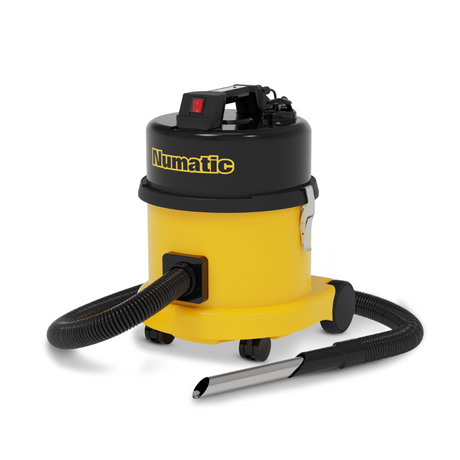
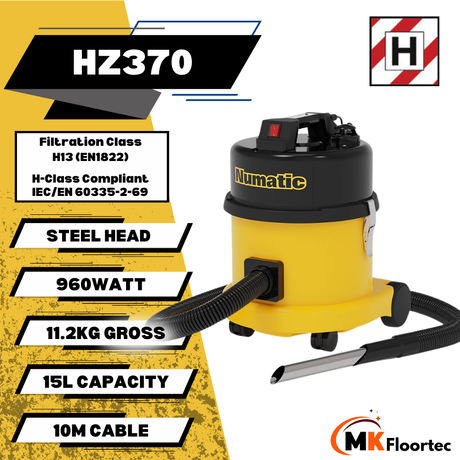
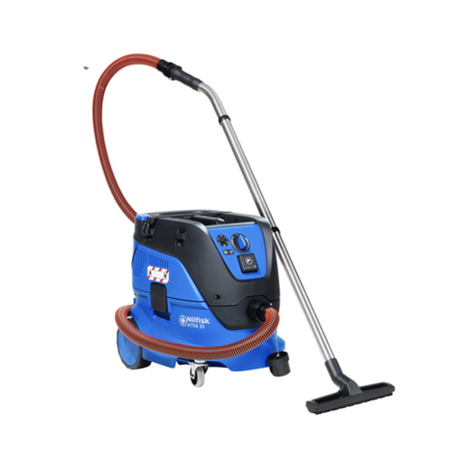
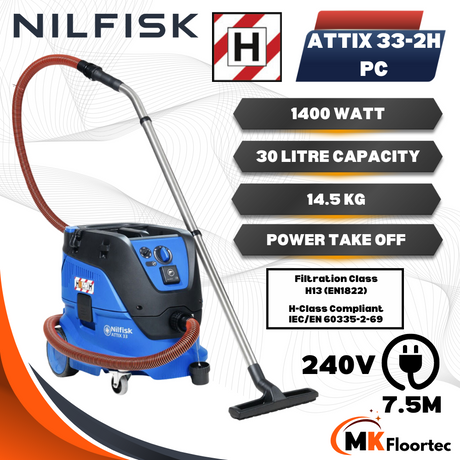
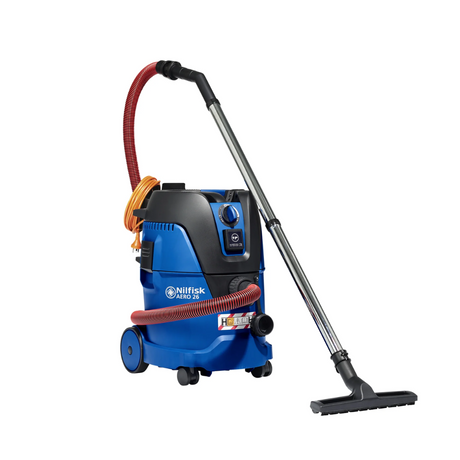
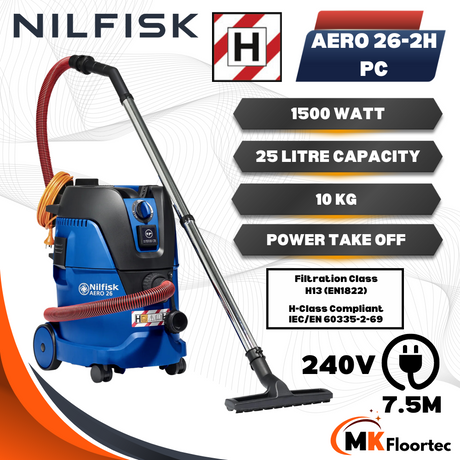
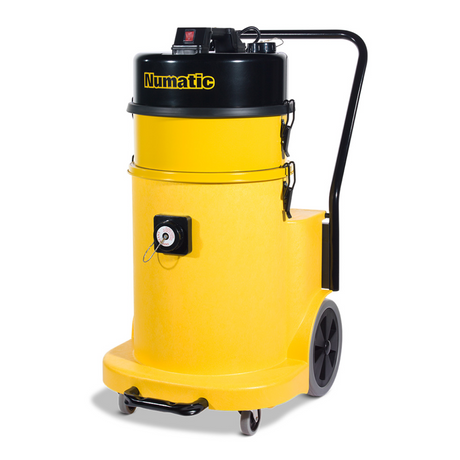
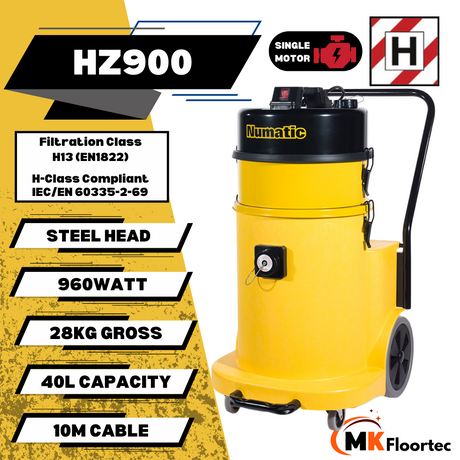
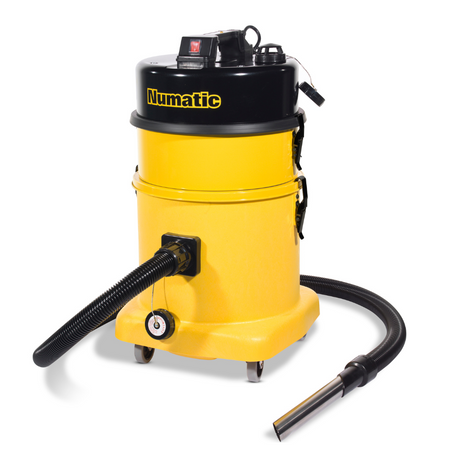
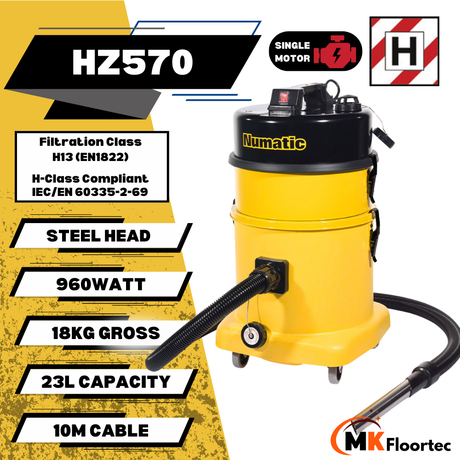
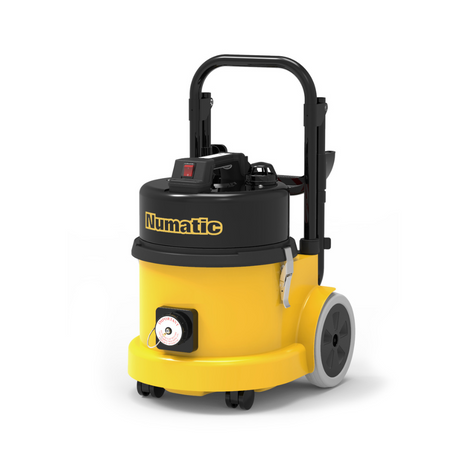
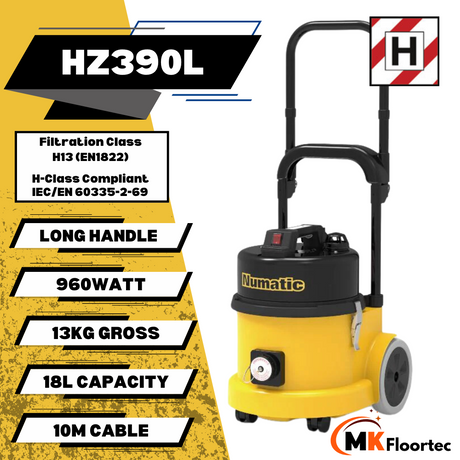
Ensure maximum respiratory protection and legal compliance with our range of H-Class vacuum cleaners and hazardous dust extractors. As UK Specialists for 40 years, MK Floortec provides the highest-certified hazardous waste vacuums designed to capture 99.995% of dangerous particles. Our selection features industry-standard engineering from Numatic (HZ range) and Nilfisk (Attix/Aero).

H-Class (High Risk) filtration is the mandatory standard for environments containing AsbestosLead dustpharmaceutical waste, and carcinogenic materials. Every unit we supply is individually certified and features essential safety components, including airflow sensors, audible alarms, and HEPA H13/H14 filtration. Whether you are performing licensed asbestos removal or managing high-risk industrial waste, we provide the technical expertise, certification support, and genuine H-Class filters to keep your team safe and your site compliant. Explore our H-Class inventory below.
What dust can an H Class Vacuum Cleaner collect?

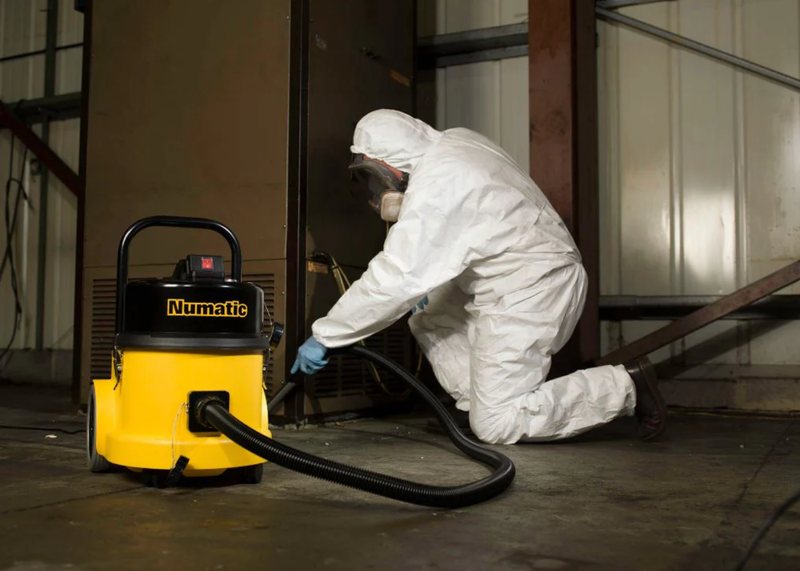
  • Asbestos dust and fibres
  • Lead dust and particles
  • Silica dust from concrete and masonry
  • Wood dust from hardwoods
  • Mould spores and bacteria
  • Pharmaceutical dust
View as

❓ Frequently Asked Questions: H-Class & Hazardous Dust Vacuums & Extractors

What makes a vacuum "H-Class" certified?

An H-Class (High Hazard) vacuum is not just a standard machine with a HEPA filter.To be certified, the entire unit must be individually tested and proven to have a filtration efficiency of 99.995% or higher.It must also feature specialised safety components such as a fully sealed chassis to prevent dust leaks, an airflow sensor with an audible alarm, and a secure waste disposal system that prevents user exposure during bag changes.

What is a DOP Test and how often do I need one?

DOP (Dispersed Oil Particulate) Test is a highly technical procedure where a safe "smoke" is injected into the vacuum to check for leaks in the seals or the HEPA filter.

  • Frequency: For H-Class vacuums used with asbestos, a DOP test is required every 6 to 12 months, or anytime the machine has been dropped or damaged.
  • Certification: As UK Specialists, we ensure our H-Class range is ready for site-work upon purchase and can advise on local testing partners to keep your certification valid.

Can I use a domestic HEPA vacuum for asbestos or lead dust?

No. Under HSE guidelines, domestic or standard commercial vacuums (even those with "HEPA" filters) are strictly prohibited for use with asbestos or carcinogenic dusts.These machines are not airtight; hazardous fibres can bypass the filter or escape through the casing and be blown back into the air. H-Class machines like the Numatic HZ or Nilfisk Attix are the only legally compliant option for high-risk materials.

What are the mandatory safety features on an H-Class vacuum?

To meet the BS EN 60335-2-69 standard, an H-Class machine must include:

  1. Airflow Monitoring: An alarm that sounds if suction falls below 20m/s (indicating a clog or leak).
  2. H14 HEPA Filtration: The highest grade of filter capable of trapping microscopic fibres.
  3. Sealing Caps: A cap for the hose inlet to prevent dust from escaping during transport.
  4. Anti-Static Hoses: To prevent dust ignition and static shocks during use.

Does H-Class cover Silica Dust (RCS)?

While M-Class is the minimum requirement for silica dust, many UK contractors now upgrade to H-Class for masonry and concrete grinding. Because silica dust (RCS) is carcinogenic, using an H-Class machine provides a higher "Safety Margin" and ensures maximum protection for the operator beyond the legal minimum.

Compare /3

Loading...