UK’s Authorised Technical Hub for Industrial Cleaning Machinery Free Delivery On Order Over £99 Sign Up For Exclusive Offers UK’s Authorised Technical Hub for Industrial Cleaning Machinery Free Delivery On Order Over £99 Sign Up For Exclusive Offers
Request Machine Demonstration

Providing Cleaning Technology for over 40 Years

Industrial Floor Scrubber Dryers: Professional Floor Care Solutions

UK Floor Care Specialists: 40 Years of Expert Sales, Support & Site Demonstrations

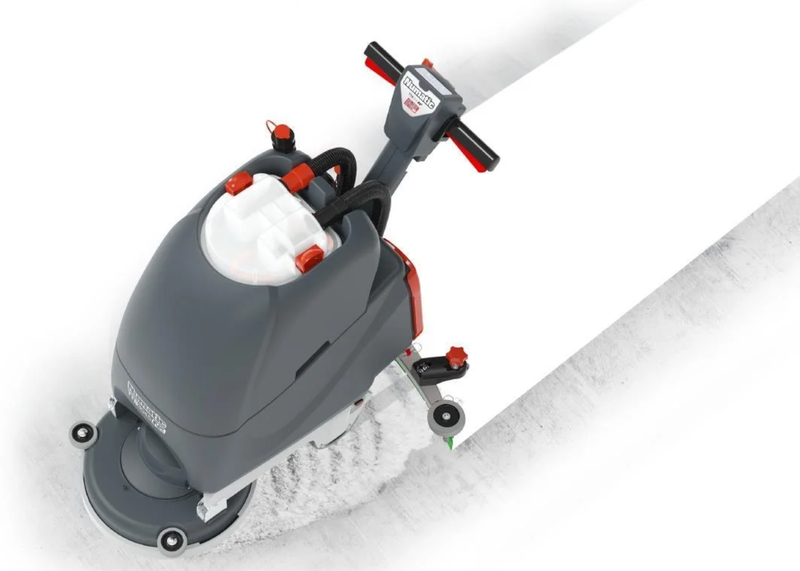
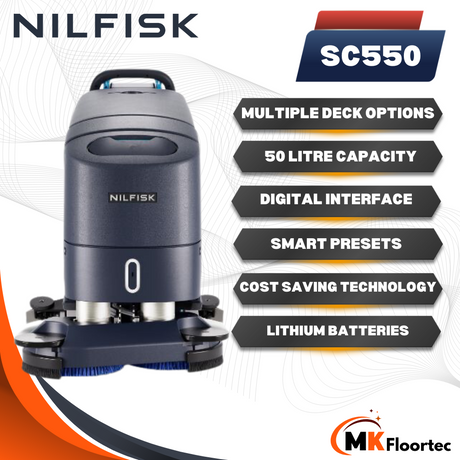
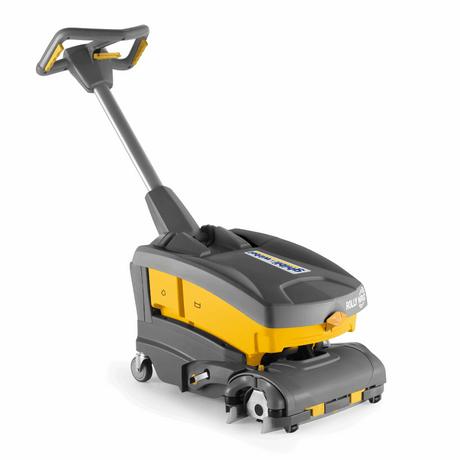
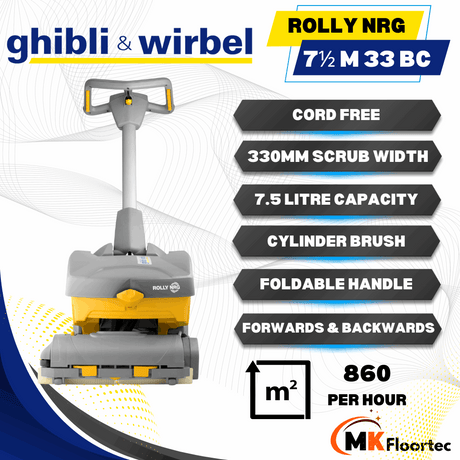
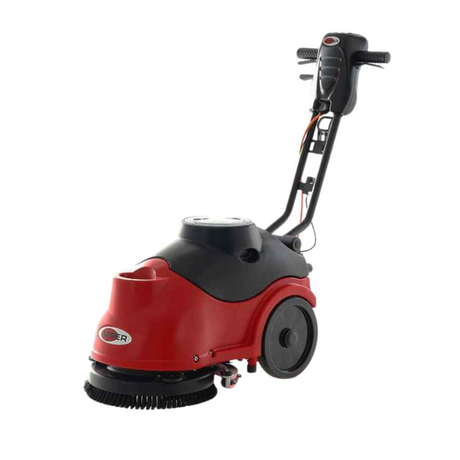
Achieve pristine, bone-dry floors in a single pass with our industry-leading range of industrial floor scrubber dryers. As UK Floor Care Specialists with 40 years of expertise, MK Floortec provides high-productivity solutions including maneuverable walk-behind scrubber dryers for retail and healthcare, and heavy-duty ride-on scrubber dryers for large-scale warehouse and logistics hubs.

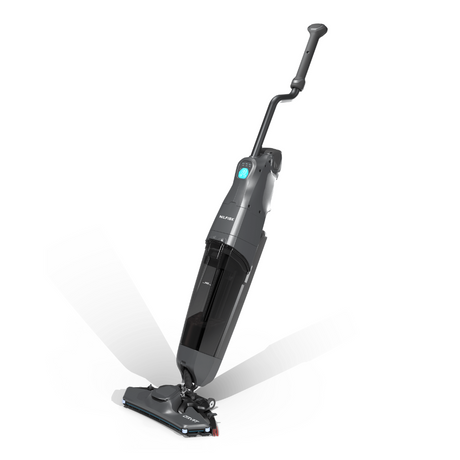
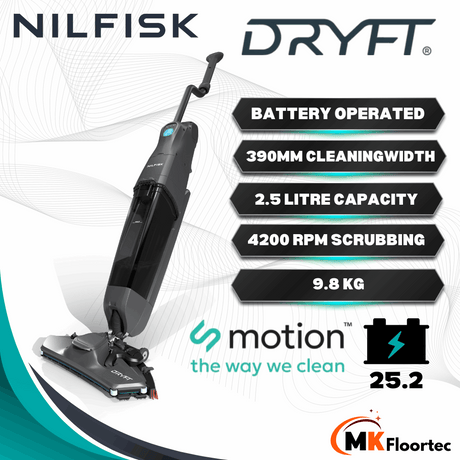
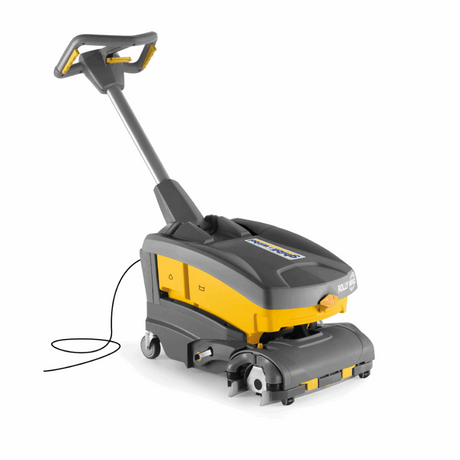
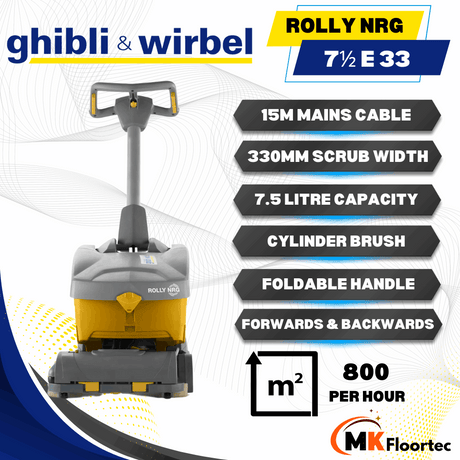
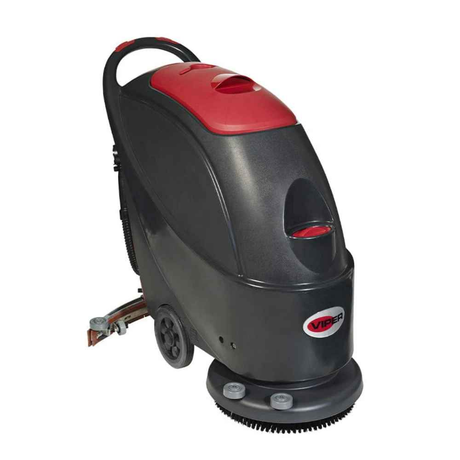
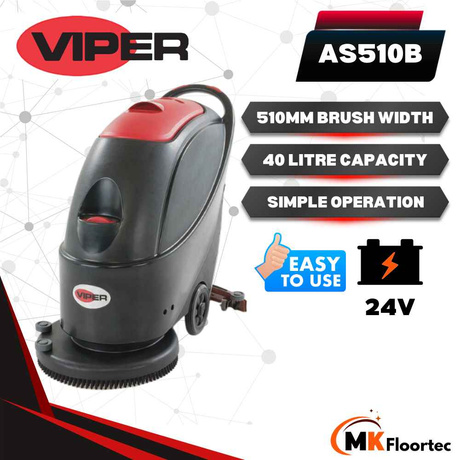
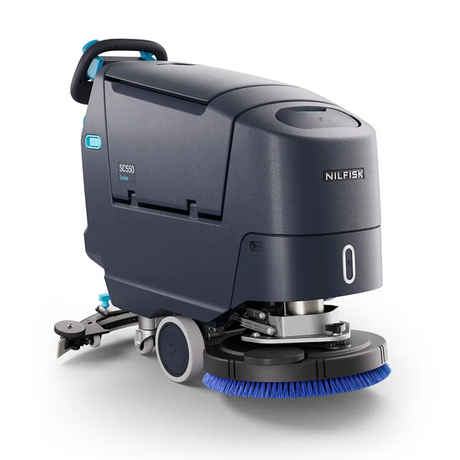
We stock a large collection of commercial floor scrubbers from world-class brands like NumaticNilfiskViper, and Ghibli. Whether you need a compact cordless battery-powered scrubber dryer for maximum safety or a mains-electric powered floor cleaner for unlimited run-time, our machines combine aggressive scrubbing with instant vacuum drying technology. From pedestrian floor scrubbers to industrial ride-on machines, we maximise operational uptime and eliminate trip hazards. Explore our specialised categories below to find the ideal tank capacity and brush width for your floor type.

How Does a Floor Scrubber Dryer Work?

Wash

The cleaning solution is dispensed from the machine, applied to the scrubbing brush, and then spread across the floor surface.

Scrub

The combination of cleaning solution and intense scrubbing action provides a deep clean of the floor surface, effectively removing dirt and grime.

Dry

Powerful vacuum suction is applied, and with the help of squeegee blades, waste is efficiently removed from the floor, leaving it dry.

Clean

This simultaneous one-machine process guarantees that floor surfaces are clean, dry, and safe.

View as

❓ Frequently Asked Questions: Industrial Floor Scrubber Dryers

Find expert answers to common questions about our professional floor scrubber dryer range.
  • A floor buffer (or polisher) is designed to rotate a pad to shine or strip a floor, often requiring a separate vacuum to pick up waste. A scrubber dryer is an all-in-one system that dispenses water/chemical, scrubs the floor with high pressure, and immediately vacuums the dirty residue into a recovery tank, leaving the floor bone-dry and safe to walk on instantly.

  • The choice is dictated by square footage (m2) and layout. Walk-behind (pedestrian) models are best for areas under 1,500m2or tight spaces like retail aisles and corridors. Ride-on scrubber dryers are recommended for large-scale warehouses or expansive areas (over 1,500m2) as they significantly reduce operator fatigue and increase productivity by up to 400%.

  • 1. Is a battery-powered scrubber dryer worth the higher upfront cost?

    While a battery-powered machine typically has a 20–40% higher initial purchase price, it often achieves ROI (Return on Investment) within 6–12 months through labour savings.

    • The "Cable-Tug" Penalty: Data shows that managing a 15m or 20m cable—uncoiling, moving between sockets, and untangling from furniture—can waste up to 23% of a cleaning shift.
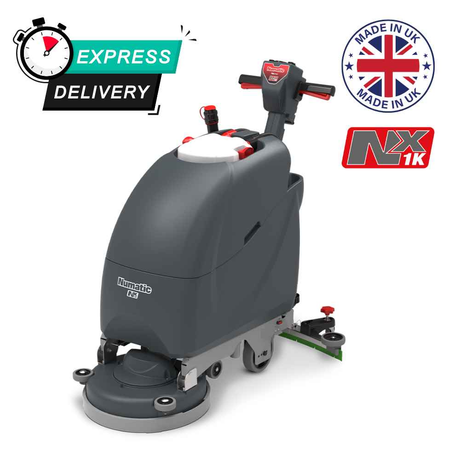
    • Productivity: A cordless model like the Numatic 244NX or 440NX allows for "continuous flow" cleaning, enabling your staff to cover significantly more square footage in the same timeframe compared to a tethered mains unit.

    2. How does battery technology (Lithium-Ion vs. Gel) impact performance?

    Not all battery machines are equal. MK Floortec specialises in modern Lithium-Ion technology, which offers significant advantages over traditional Lead-Acid or Gel batteries:

    • Opportunity Charging: You can "top-up" charge Lithium batteries during a 15-minute coffee break without damaging the cells. Gel batteries require a full 8–12 hour uninterrupted charge cycle.
    • Consistent Power: Unlike Gel batteries, which lose suction and brush pressure as they deplete, Lithium-ion provides 100% consistent performance until the battery is empty.
    • Lifespan: A high-quality Lithium battery can last up to 2,500 cycles, compared to just 500–800 for Lead-Acid, drastically reducing long-term replacement costs.

    3. Are mains-powered (cable) scrubber dryers better for very large areas?

    Mains-powered machines are ideal for uninterrupted, heavy-duty cleaning in areas where power sockets are abundant and footfall is zero (e.g., after-hours warehouse cleaning).

    • Pros: They provide unlimited runtime and are generally lighter because they lack heavy battery packs.
    • Cons: They are restricted by cable length (usually 15-20m). In a 100-metre corridor, a worker might have to change sockets 6 times, losing roughly 6–10 minutes of productivity per floor. For large, open-plan areas without easy socket access, a Ride-On Battery Scrubber is almost always the more efficient choice.

    4. Which power source is safer for "Daytime Cleaning" in public spaces?

    For daytime cleaning in hospitals, schools, or retail environments, battery-powered is the only safe choice. * Trip Hazard Elimination: Trailing cables are a primary cause of workplace slips and trips. By removing the cord, you eliminate the legal and safety liability of having a live wire across a public thoroughfare.

    • Rapid Response: Cordless machines can be deployed instantly for "spot cleaning" spills without searching for a power outlet, keeping floors dry and safe in seconds.

    5. Do mains-powered machines require less maintenance than battery models?

    Yes and no.

    • Mains Maintenance: You avoid battery health checks, but you face frequent costs for PAT testing and replacing damaged or frayed power cables, which are the #1 cause of service call-outs for corded equipment.
    • Battery Maintenance: Modern Lithium-ion batteries are virtually maintenance-free (no water topping required).The primary "cost" is the eventual replacement of the battery pack after several years of service.

    6. Can I use an extension lead with a mains scrubber dryer?

    We strongly advise against this. Using a standard domestic extension lead can cause a significant voltage drop, which leads to the vacuum motor or brush motor overheating and eventually burning out. If your cable doesn't reach, it is a clear sign that you should upgrade to a battery operated machine for that specific area.
  • Choosing between a disc or cylindrical brush depends on your floor type and debris levels. A Disc Brush system uses flat, horizontal rotation (approx. 150–300 RPM), making it the best choice for high-pressure scrubbing, floor stripping, and achieving a high-gloss polish on smooth surfaces like LVT, vinyl, and polished concrete.

    Conversely, a Cylindrical Brush system features high-speed, counter-rotating brushes (up to 1000 RPM) that provide a built-in pre-sweep function. This allows the machine to pick up light debris (screws, wood chips, or grit) into a dedicated hopper while scrubbing, eliminating the need to sweep beforehand. Cylindrical brushes are superior textured tiles, and deep grout lines, as the vertical bristles reach into crevices that flat pads miss.

  • Most industrial floor scrubbers are highly versatile and safe for use on sealed wood, polished concrete, vinyl (LVT), tiled floors, and epoxy resin. However, the key is the brush or pad selection. Soft brushes and pads are required for delicate surfaces, while aggressive grit-brushes or pads are used for heavy-duty concrete cleaning. We can advise on the most suitable scrubbing brush or pad holder drive board selection.

  • Yes. You must use low-foaming detergents. Standard soaps or high-foam detergents can create excessive foam suds that will be sucked into the vacuum motor, potentially causing expensive electrical damage.

  • Odours are caused by bacteria buildup in the recovery tank. After every shift, the recovery tank must be drained and rinsed thoroughly with clean water. We also recommend leaving the tank lid slightly ajar when the machine is not in use to allow airflow and prevent stagnant smells.

  • Squeegee blades are the most critical part for ensuring a dry floor. You should inspect them daily. Most blades are four-sided—if one edge is nicked or worn, you can simply flip it to a fresh edge. Typically, blades should be replaced every 3–6 months depending on the floor surface (rough concrete wears blades faster than smooth vinyl).

Compare /3

Loading...